
01
Common law framework
The same contractual and corporate law tradition as leading international financial centres. Documentation that institutional counterparties recognise.


Common law incorporation, treaty access, and ring-fenced courts for cross-border investment vehicles.
Special Purpose Vehicles and holding companies are the legal architecture that makes private equity, family offices, joint ventures, and cross-border M&A work. The vehicle that sits between the sponsor and the asset is rarely the headline of the deal. It is also, almost always, the thing that determines whether the deal works.
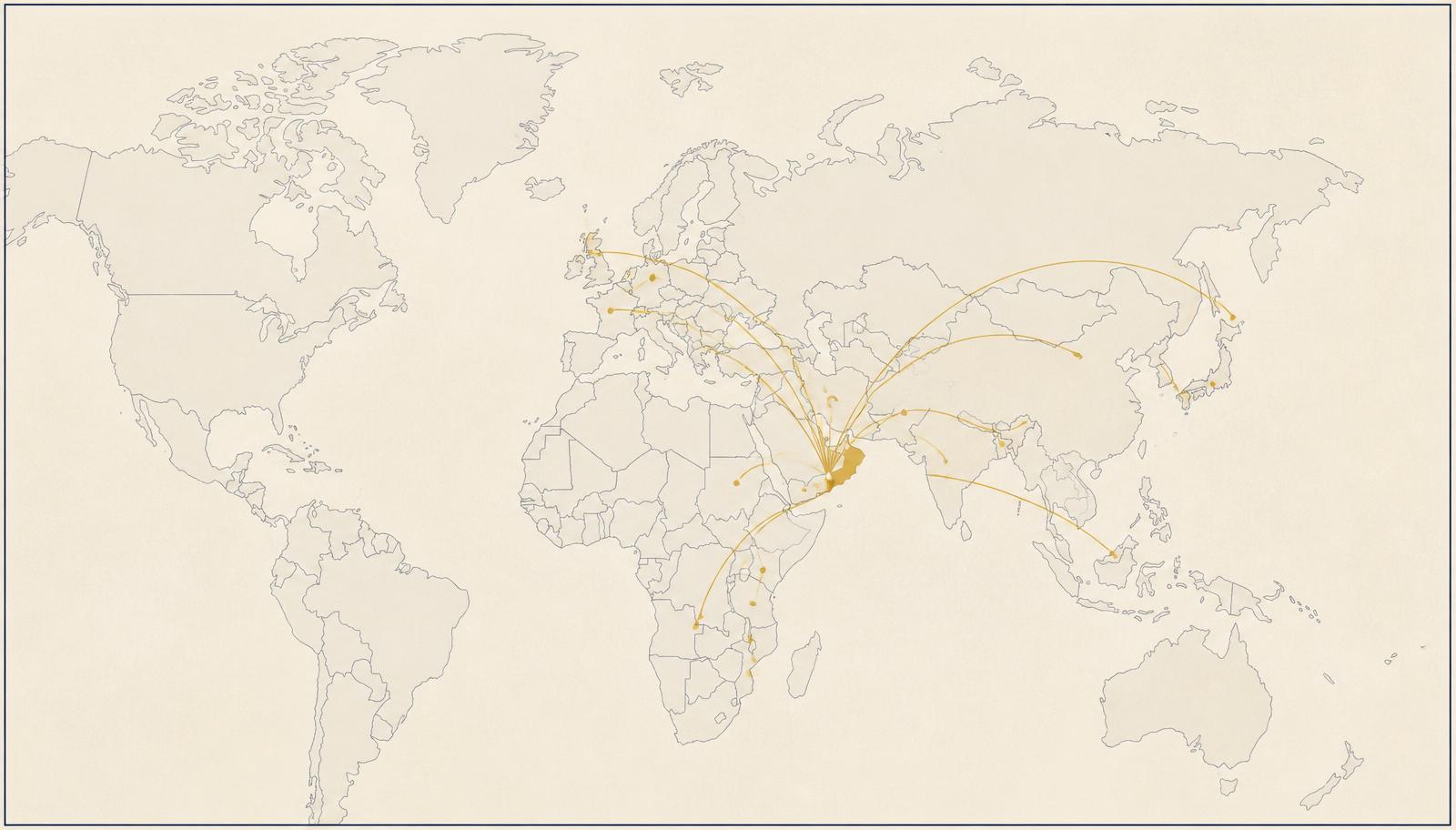
A private equity fund consolidating a portfolio of South Asian businesses. A family office managing multigenerational wealth across asset classes and jurisdictions. A multinational using Oman as a gateway to African markets. IFC Oman provides the legal architecture and the cost structure to make these vehicles work — common law documentation, fast incorporation, ring-fenced courts, and treaty access across 36+ jurisdictions.

An IFC Oman holding company for a South Asian investment portfolio is physically and legally in the Sultanate of Oman: the same time zone as the operating businesses, staffed by people who understand the regulatory environment, and able to appear in Omani courts if needed.
That combination of legal substance and geographic relevance is what IFC Oman offers that an offshore island jurisdiction cannot — the certainty of a common law regime, a real place with people on the ground, and treaty access that makes cross-border income flow tax-efficient.
The same contractual and corporate law tradition as leading international financial centres. Documentation that institutional counterparties recognise.
Three to five business days for standard SPV and holding company structures. No quiet queues. No bureaucratic deferrals.
IFC Oman holding company fees are substantially below other international financial centres, with a cost structure built for sponsors managing many vehicles.
Access to the Sultanate of Oman's double taxation agreement network, with 36+ treaties in force and further agreements under negotiation.
Zero withholding tax on dividends distributed to foreign shareholders. Cross-border distributions flow without leakage at the IFC Oman level.
IFC Oman Courts operate independently of Oman's domestic civil law system. Disputes are resolved inside the jurisdiction, under common law, in English.
Confidentiality and data protection standards consistent with international best practice. Sponsors operating across markets keep their structures private.
Real presence in Oman with local staff and premises. Tax residency by virtue of incorporation plus substantive activity — not a paper address.
IFC Oman’s framework accommodates the structures that sponsors most often need.
 01
01Holding equity stakes in operating subsidiaries across MENA, South Asia, or Africa.
For sponsors consolidating a portfolio under a single jurisdictional roof. Common law contractual certainty and treaty access across all key markets.
 02
02Fund holding structures, management company entities, and co-investment vehicles.
Combined with the IFC Oman fund framework, sponsors can host their fund, their management entity, and their co-investment vehicle under one regulatory and tax regime.
 03
03Multigenerational wealth holding with succession, governance, and asset protection.
Designed for families managing wealth across generations, with governance structures, succession planning, and asset protection that institutional advisors recognise.
 04
04Neutral holding structure for JV arrangements between cross-border parties.
The neutral seat argument applies to JVs as much as to syndicated loans. IFC Oman is a credible common law jurisdiction acceptable to GCC, South Asian, and African counterparties alike.
 05
05Holding title to real property in IFC Oman, in Oman, or internationally.
Property funds, single-asset SPVs, and international real estate platforms can all be domiciled under the IFC Oman framework.
 06
06Centralising intellectual property ownership for regional licensing.
Brand, patent, and software licensing structures benefit from a common law contractual environment and treaty-based royalty flows.
 07
07Special purpose vehicle for bond or Sukuk issuance, ring-fencing the issuer.
Combined with the IFC Oman capital markets framework, the same jurisdiction hosts the issuer, the documentation, and the dispute resolution mechanism.
 08
08SPV for securitisation transactions: receivables, mortgages, project finance.
True-sale and synthetic securitisation structures, with common law documentation and bankruptcy-remote ring-fencing recognised by international counterparties.
Oman’s bilateral network covers 39 jurisdictions in force, with a further 2 signed and pending ratification — providing reduced withholding rates, relief from double taxation, and access to mutual agreement procedures for entities resident in Oman.
The full DTA schedule is maintained by the Oman Tax Authority. Treaty rates may be subject to conditions, including minimum shareholding thresholds and beneficial ownership requirements. Professional tax advice should be sought for specific structuring questions.
Move between the sectors of IFC Oman’s regulated platform.
Regulated fund management for the Gulf, South Asia, and Africa.
Trade finance, corporate banking, investment banking, and private wealth.
Debt and equity issuance, Sukuk, structured finance.
Digital payments, open banking, digital assets, and RegTech.
Captive insurance, treaty reinsurance, and specialty lines.
Shari'a-compliant banking, Sukuk, Islamic asset management, and takaful.
Law, accounting, audit, compliance, and management consulting.
Cross-border holding vehicles, PE and VC platforms, family offices, joint ventures.

Speak to the IFC Oman desk for a single point of contact across incorporation, treaty positioning, and ongoing administration of your holding vehicle.